

Have you noticed a white patch on one of your teeth that doesn’t disappear when you brush? Perhaps it’s been there for years, or you’ve only recently spotted it in the mirror.
White spots on teeth can have several causes. Some develop while teeth are forming, while others appear later when enamel begins to lose minerals. They may be harmless colour differences, but a new chalky white patch can sometimes be an early sign of tooth decay.
The important thing is to understand what’s causing the mark before deciding whether anything needs to be done.
At Dr Raymond Platon & Associates in Wetherill Park, we can examine changes in tooth enamel and explain whether monitoring, preventive care or treatment may be appropriate.
If you’ve noticed a new or changing white patch, call (02) 9609 2935 to arrange a dental examination.
What Do White Spots on Teeth Mean?
White spots on teeth are areas of enamel that appear lighter, cloudier or more opaque than the surrounding tooth surface.
They can look like small dots, faint lines or larger chalky patches. Some become more noticeable when the teeth are dry, while others remain visible all the time.
The appearance alone doesn’t reveal the exact cause.
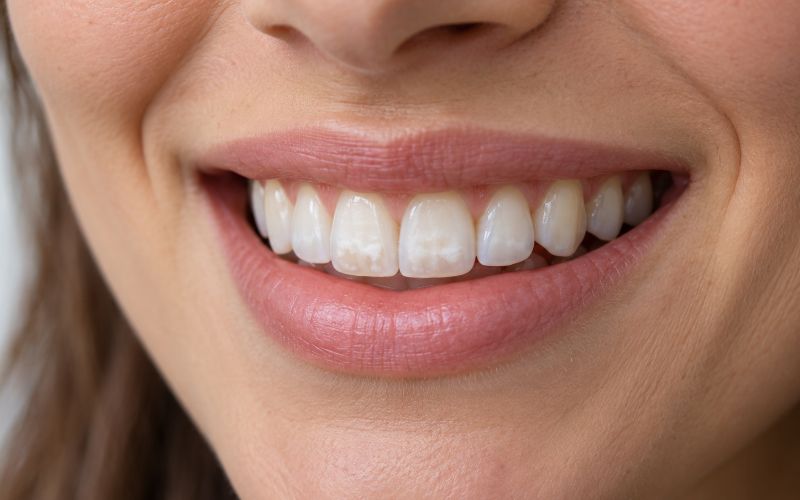
White spots on front teeth may be caused by enamel mineral loss or differences in enamel development.
For example, a white patch that develops near the gumline may be associated with early mineral loss. However, a mark that has been present since a permanent tooth first erupted could be related to how the enamel developed.
Not every white spot is tooth decay, and not every white spot requires treatment.
Understanding when the mark appeared, whether it has changed and the condition of the enamel helps a dentist determine the next step.
What Causes White Spots on Teeth?
There isn’t just one explanation. Several different enamel conditions can produce similar-looking marks.
1. Early enamel demineralisation
Your tooth enamel contains minerals that help protect the underlying tooth.
When bacteria in dental plaque come into contact with sugars from food and drinks, they produce acids. Repeated acid attacks can gradually remove minerals from enamel.
In the early stages, this may create a chalky white area before a cavity develops.
These marks often appear close to the gumline or in places where plaque is difficult to remove.
If the enamel surface is still intact, the process can sometimes be arrested and some lost minerals restored through appropriate fluoride exposure, better plaque control and changes to eating habits.
However, even when early decay is stopped, a visible white mark may remain.
Healthdirect Australia explains that a white spot on a tooth can be an early sign of decay.
2. White spots after braces
Some people notice white patches on their teeth after having orthodontic braces removed.
This can happen because brackets and wires make certain areas harder to clean. Plaque may remain around the brackets, allowing acids to affect the surrounding enamel.
When the braces are removed, these affected areas can become more noticeable.
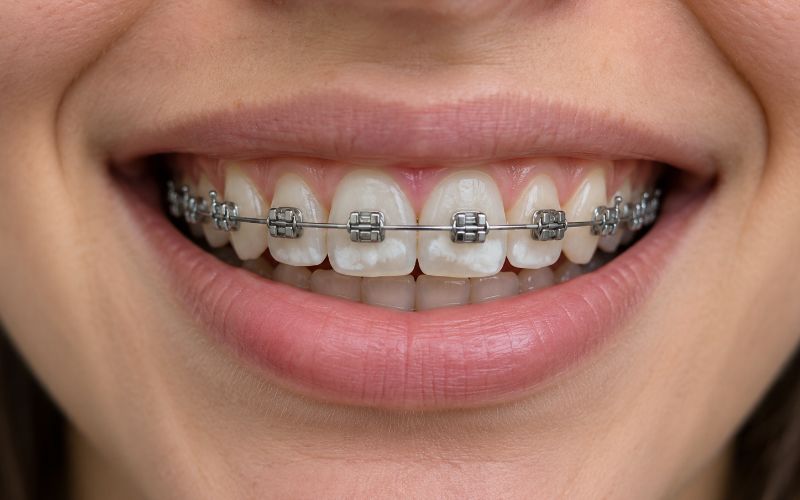
Plaque accumulation around orthodontic brackets can contribute to white spot lesions on tooth enamel.
The braces themselves aren’t necessarily responsible for damaging the enamel. Instead, white spot lesions are commonly associated with plaque accumulation and enamel demineralisation during orthodontic treatment.
Careful brushing around brackets, cleaning between teeth and attending recommended dental appointments can help reduce this risk.
If you’re currently having orthodontic treatment, learn more about maintaining your teeth and gums during braces and orthodontic treatment in Wetherill Park.
3. Dental fluorosis
Dental fluorosis develops when a child takes in excessive fluoride while permanent teeth are still forming beneath the gums.
Mild fluorosis may appear as faint white lines, flecks or cloudy patches on the enamel once the teeth erupt.
These marks are often noticed during childhood and may remain visible into adulthood.
Importantly, fluorosis isn’t a reason to avoid fluoride toothpaste.
When used according to age-appropriate recommendations, fluoride helps protect teeth against decay. Mild fluorosis is generally a cosmetic variation rather than a dental health problem.
Fluorosis does not newly develop in fully formed adult teeth.
4. Differences in enamel development
Sometimes enamel forms differently before a tooth appears in the mouth.
Conditions involving enamel hypomineralisation can cause white, cream or yellow-brown areas on one or several teeth.
These changes may have developed years before the marks become visible.
Some affected teeth have no symptoms and remain stable. Others may be sensitive or more vulnerable to enamel breakdown.
The treatment, if any, depends on the particular enamel condition and how much the tooth is affected.
How Does a Dentist Know What Is Causing the White Spots?
One of the most useful parts of a dental examination is identifying whether a white mark represents an active problem or a stable change in enamel appearance.
Rather than assuming that every white patch needs whitening or a cosmetic procedure, a dentist considers several clues.
When did the mark first appear?
A white patch present since childhood may point towards a developmental enamel change. A new mark appearing near the gumline could suggest mineral loss.
Where is the mark located?
White areas around the former positions of orthodontic brackets may be associated with plaque accumulation during braces treatment.
Marks affecting several teeth in a similar pattern may suggest a different cause.
What does the enamel surface look and feel like?
The dentist may assess whether the area is smooth, rough, intact or showing signs of breakdown. Changes in appearance when the enamel is wet or dry can also provide useful information.
Are there other symptoms?
Sensitivity, food trapping, visible plaque or a change in tooth appearance may influence the assessment.
The dentist also considers your dental history, diet, fluoride exposure, previous orthodontic treatment and risk of tooth decay.
These findings help determine whether the tooth needs preventive care, further investigation, treatment or simply monitoring.
Dental X-rays are not automatically required for every white spot. They may be recommended if there is a clinical reason to investigate possible decay or another dental concern.
This distinction matters because treating the appearance without understanding the cause may not address the underlying problem.
Can White Spots on Teeth Be Removed?
Sometimes their appearance can improve, but the answer depends on what caused them.
A white mark resulting from early mineral loss is different from one caused by fluorosis or an enamel development condition.
Some changes respond to preventive care. Others may remain visible even when the tooth is healthy.
There is no single treatment that works for every type of white spot.
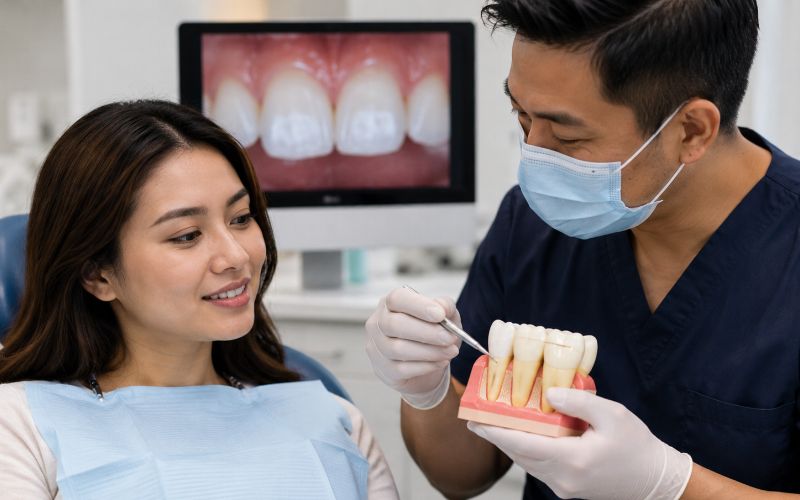
A dental examination can help identify the cause of white spots on teeth and determine whether treatment is necessary.
Fluoride and remineralisation
When a white spot is associated with early enamel mineral loss, the priority is to stop further damage.
Fluoride can help reduce mineral loss and support remineralisation of early enamel lesions.
Consistent brushing with fluoride toothpaste, good plaque removal and limiting frequent sugary snacks and drinks are important parts of this approach.
Depending on the patient’s risk of decay, a dentist may also recommend professional fluoride applications.
At our clinic, fluoride treatment in Wetherill Park is available as part of preventive dental care when clinically appropriate.
However, fluoride cannot rebuild a tooth that has developed a cavity, and it doesn’t necessarily make every existing white mark disappear.
The Australian Dental Association’s patient guide to fluoride explains how fluoride helps protect enamel and prevent tooth decay.
Does teeth whitening remove white spots?
Not necessarily.
Whitening changes the colour of teeth, but it doesn’t repair the structural differences responsible for many white spots.
Some marks may become less noticeable after whitening, while others can remain visible. Occasionally, the contrast between the white patches and surrounding enamel may appear more obvious, particularly early in the whitening process.
That’s why it’s important to identify the cause of uneven tooth colour before choosing a whitening treatment.
Our article on why professional teeth whitening doesn’t work for everyone explains why different types of tooth discolouration respond differently.
What about cosmetic dental treatments?
For selected patients, changing the visible surface of a tooth may be an option when white marks remain a cosmetic concern.
Composite bonding, for example, uses tooth-coloured resin to modify the appearance of a tooth. However, it can require maintenance or repair over time and may not be the most conservative option for every patient.
Dental veneers may be considered in certain situations, although they can involve irreversible changes to tooth structure, along with ongoing maintenance and possible future replacement.
Other approaches, such as resin infiltration or enamel microabrasion, may be used by some dental professionals for selected enamel changes. Their suitability and availability vary.
These procedures are not appropriate for every white mark, and they should not be assumed necessary simply because a patient dislikes the appearance of a tooth.
At Dr Raymond Platon & Associates, we discuss suitable treatment options following an examination, including the benefits, limitations, risks, costs and alternatives.
Sometimes the most appropriate recommendation is to leave a harmless white spot alone.
Can You Prevent White Spots From Developing?
Some white marks are caused by conditions that develop while teeth are forming, so they cannot always be prevented through brushing.
However, white spots caused by early enamel mineral loss are often associated with factors that can be managed.
A few practical habits can make a difference:
- Brush twice daily with fluoride toothpaste and a soft toothbrush.
- Clean between your teeth every day using floss or suitable interdental brushes.
- Pay extra attention to cleaning around orthodontic brackets and wires.
- Reduce how frequently you snack on sugary foods or sip sweet drinks between meals.
- Drink water regularly, preferably fluoridated tap water.
- Follow your dentist’s advice if you have a higher risk of tooth decay.
The frequency of sugar exposure is particularly important. Eating or drinking something sugary repeatedly throughout the day gives plaque bacteria more opportunities to produce acids.
You don’t need an elaborate oral care routine. Good technique, consistent cleaning and appropriate fluoride exposure are more valuable than repeatedly switching products.
Avoid using lemon juice, abrasive powders or harsh home remedies in an attempt to remove white spots. These may damage the enamel without treating the cause.
When Should You See a Dentist About White Spots?
A small white mark that has been unchanged for many years may not require treatment.
However, arranging an examination is sensible if you notice a new chalky patch, a mark that appears to be spreading, sensitivity or a rough area that wasn’t present before.
Parents should also seek dental advice if white or chalky marks develop near a child’s gumline, as early tooth decay can begin without causing pain.
If you notice white spots after braces, your dentist can assess whether the enamel changes are stable and whether additional preventive care would be helpful.
The goal of the appointment isn’t necessarily to remove the spot. It’s to understand whether the tooth is healthy and whether anything needs to be done.
Concerned About White Spots on Your Teeth in Wetherill Park?
If you’ve noticed white marks on your teeth, a dental examination can help identify the likely cause.
At Dr Raymond Platon & Associates, we assess enamel changes alongside your oral health, dental history, existing restorations and risk of tooth decay.
Depending on the findings, we may recommend monitoring, preventive care or discussing appropriate treatment options.
Our clinic is located at 70 Lily St, Wetherill Park NSW 2164. We also welcome patients from nearby communities including Bossley Park, Fairfield West and Prairiewood.
To arrange an appointment, call (02) 9609 2935 or book online.
Frequently Asked Questions About White Spots on Teeth
Can white spots on teeth go away naturally?
Some early white spot lesions can become more stable as the enamel remineralises, particularly with appropriate fluoride exposure and improved plaque control. Their appearance may improve, but a mark can remain even after the decay process has stopped. White spots associated with enamel development differences may persist.
Are white spots on teeth a sign of calcium deficiency?
Not necessarily. White spots have several possible causes, including early enamel mineral loss, fluorosis and developmental enamel changes. Their appearance does not, by itself, show that someone has a calcium deficiency. A dental examination can help identify the likely cause.
Why do white spots appear after braces?
Plaque can collect around orthodontic brackets and wires, especially when cleaning is difficult. Acids produced by plaque bacteria may cause mineral loss in the nearby enamel, leaving chalky white patches that become more noticeable once the brackets are removed.
Can teeth whitening make white spots worse?
Whitening doesn’t necessarily damage the white spots, but it may make the contrast between affected and unaffected enamel more noticeable, especially during or shortly after treatment. Whether whitening is appropriate depends on the cause of the marks and the condition of the teeth.
Should I worry about white spots on my child’s teeth?
Not every white spot is a sign of a serious problem. However, new chalky white patches, especially near the gumline, may indicate early tooth decay. Other marks may be related to how the enamel developed. A dental examination can help determine whether preventive care or monitoring is needed.
About the Author
Dr Raymond Platon & Associates is a dental practice located at 70 Lily St, Wetherill Park NSW 2164, with a history of caring for local families spanning more than 30 years.
Principal Dentist Dr Raymond Platon (AHPRA registration DEN0001321891) has led the practice since 2002.
Our registered dental practitioners provide general, preventive, restorative, cosmetic and orthodontic dental care, with treatment recommendations based on individual clinical findings.
This article provides general oral health information and is not a substitute for a dental examination or personalised treatment advice. The suitability, risks, benefits and outcomes of any dental treatment vary according to individual circumstances.
Published: 13 October 2026
Updated: 13 October 2026