
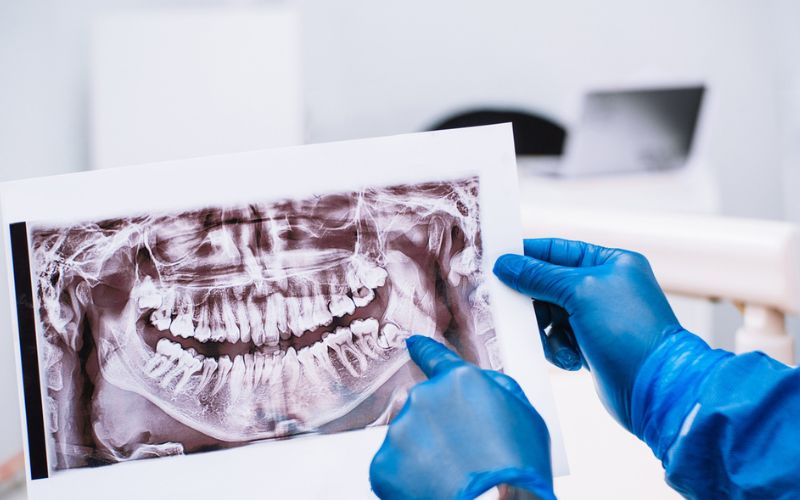
Not every wisdom tooth needs to be removed. A wisdom teeth check up can help determine whether your wisdom teeth are healthy enough to monitor or whether there is a clinical reason to consider treatment. The decision depends on the position and condition of the tooth, the surrounding gum, nearby teeth, your symptoms and, when appropriate, dental imaging.
For people in Wetherill Park, Bossley Park and Fairfield West, having wisdom teeth does not automatically mean having surgery. Some remain healthy for many years, while others become difficult to clean, repeatedly infected, decayed or associated with problems affecting nearby structures.
The important question is not simply whether you have wisdom teeth. It is whether they can remain healthy and maintainable over time.
Do Wisdom Teeth Need to Be Removed?
No. Wisdom teeth do not always need to be removed.
If a wisdom tooth has erupted into a healthy position, can be cleaned effectively and is not associated with disease or damage, monitoring may be appropriate.
However, removal may be discussed when there is recurrent infection, significant decay, difficulty maintaining the tooth, damage to a neighbouring tooth, a cyst or another clinical concern.
This is why a dentist normally assesses each wisdom tooth individually rather than applying the same recommendation to every patient.
What Happens During a Wisdom Teeth Check Up?
A wisdom teeth check up begins with a clinical examination of the back of the mouth.
Your dentist may assess whether the tooth has fully erupted, whether the surrounding gum looks healthy, whether food or plaque is repeatedly collecting around the area and whether the neighbouring molar appears to be affected.
They will also ask about symptoms. These may include previous episodes of pain, swelling, an unpleasant taste, difficulty opening your mouth or recurring inflammation around the back tooth.
Dental imaging may be recommended when clinically appropriate. An X ray can provide information that cannot always be seen during a visual examination, including the position of the tooth, its roots and its relationship with nearby teeth and anatomical structures.
Our article about dental X rays and what they reveal about oral health explains why imaging may form part of a dental assessment.
A wisdom teeth assessment combines symptoms, examination findings and imaging when needed. Pain alone does not determine whether a tooth should be removed.
When Might a Dentist Recommend Wisdom Tooth Removal?
There is no single reason that applies to everyone. Instead, several findings can influence the recommendation.
Repeated Infection Around the Wisdom Tooth
A wisdom tooth that has only partly emerged can sometimes leave an area of gum around or over the tooth where food debris and bacteria accumulate.
Inflammation or infection around a partially erupted wisdom tooth is known as pericoronitis.
It may cause gum tenderness, swelling, discomfort while chewing, an unpleasant taste or difficulty cleaning the area.
One episode does not automatically mean extraction is required. However, recurrent infection affecting the same wisdom tooth may be a reason to discuss removal.
Decay in the Wisdom Tooth
Wisdom teeth sit at the very back of the mouth, where brushing and cleaning between teeth can be more difficult.
If plaque remains around the tooth, decay can develop.
Whether the wisdom tooth should be restored, monitored or removed depends on factors such as the amount of decay, its position and whether the tooth can realistically be maintained over the long term.
Problems Affecting the Tooth in Front
The second molar sits immediately in front of the wisdom tooth.
Certain wisdom tooth positions can create an area between these teeth that is difficult to keep clean. In some cases, this can contribute to decay or gum problems involving the second molar.
Protecting the neighbouring tooth is an important part of wisdom tooth assessment.
The dentist therefore looks beyond the wisdom tooth itself and considers the health of the surrounding area.
Difficulty Keeping the Wisdom Tooth Clean
A wisdom tooth can be difficult to maintain even when it is not painful.
If its position consistently traps food and plaque, your dentist may assess whether cleaning can be improved and whether the tooth is likely to remain healthy.
This does not mean every difficult to reach wisdom tooth needs extraction. Instead, the long term maintainability of the tooth becomes part of the overall decision.
A Cyst or Another Clinical Finding
Less commonly, a cyst or another problem can develop around an unerupted or impacted wisdom tooth.
These findings are usually identified through clinical examination and appropriate imaging rather than symptoms alone.
Treatment recommendations depend on what is found and the individual circumstances.
Does an Impacted Wisdom Tooth Always Need to Come Out?
No. The word impacted does not automatically mean that every wisdom tooth must be removed.
An impacted wisdom tooth is one that has been prevented from erupting normally, often because of its position, available space, nearby teeth or bone.
Some impacted teeth become associated with infection, decay, gum problems or other pathology. In those situations, treatment may be appropriate.
However, the dentist considers the individual clinical findings rather than recommending removal solely because the tooth is impacted.
Treatment should address an identifiable clinical concern rather than the presence of a wisdom tooth alone.
What Does Wisdom Tooth Pain Feel Like?

Pain or tenderness at the back of the jaw can have several causes. A dental assessment can help identify whether a wisdom tooth or another dental problem is responsible.
Wisdom tooth problems do not produce exactly the same symptoms in everyone.
Some people describe pressure or a dull ache behind the last molar. Others notice tenderness or swelling in the gum surrounding the tooth.
Possible symptoms include discomfort at the back of the mouth, pain when chewing, recurring gum swelling, difficulty cleaning around the tooth, an unpleasant taste or discomfort when opening the mouth.
However, these symptoms are not specific to wisdom teeth.
Decay in another tooth, gum inflammation, infection and some jaw conditions can produce similar symptoms.
Pain at the back of the mouth should therefore be diagnosed rather than assumed to be wisdom tooth pain.
If you have significant dental pain or swelling, our emergency dentistry information explains when more prompt dental assessment may be appropriate.
Can a Wisdom Tooth Need Treatment If It Does Not Hurt?
Yes.
A lack of pain does not necessarily confirm that a wisdom tooth is healthy.
For example, decay or a problem affecting the neighbouring molar may sometimes develop before the area becomes uncomfortable.
At the same time, a pain free wisdom tooth does not automatically require removal either.
This is why regular examinations can be useful. They allow the dentist to assess the health and position of a wisdom tooth rather than relying on symptoms alone.
If you are unsure whether a wisdom tooth can be safely monitored, a dental check up can help clarify its position and condition before any treatment decision is made. You can arrange an assessment with our Wetherill Park dental team by calling (02) 9609 2935.
Can I Keep My Wisdom Teeth?
Potentially, yes.
Many people can retain one or more wisdom teeth if they are healthy and maintainable.
A dentist may consider monitoring when the wisdom tooth has an acceptable position, the surrounding tissues are healthy, there is no significant decay or other pathology, neighbouring teeth are not being adversely affected and the area can be cleaned adequately.
Good oral hygiene then becomes particularly important.
Because the teeth are positioned at the back of the mouth, your dentist or oral health professional can also show you how to clean the area effectively.
Keeping a wisdom tooth is reasonable when it can remain healthy. Removing one may be appropriate when keeping it creates a greater clinical concern.
Should Wisdom Teeth Be Removed Before They Start Hurting?
Not necessarily.
The absence of pain does not prevent a dentist from identifying a problem, but it also does not justify routine removal in every patient.
Instead, the decision should consider the condition of the tooth and surrounding structures, the likelihood of maintaining the area, previous problems and any relevant imaging findings.
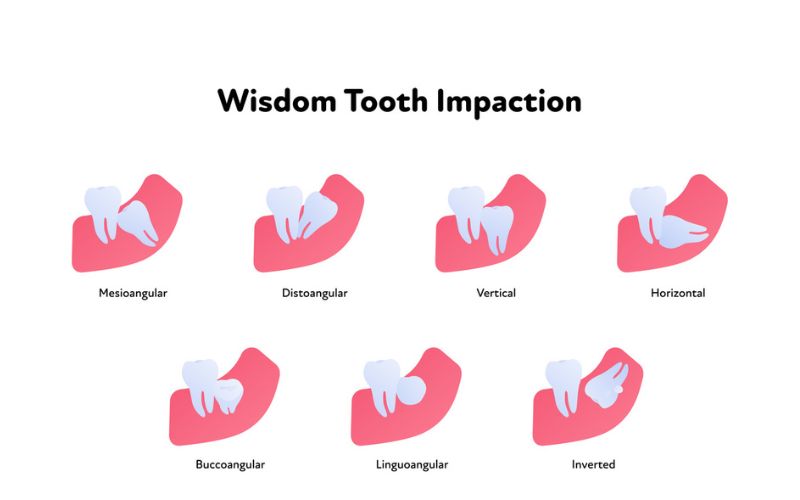
Wisdom teeth can be impacted in different positions. Tooth position is one of several clinical factors considered when deciding whether monitoring or treatment may be appropriate.
For some patients, monitoring is suitable.
For others, treatment may be recommended before repeated symptoms develop because an identifiable dental problem is already present.
The key is individual assessment rather than waiting for severe pain or removing every wisdom tooth preventively.
What Happens If I Leave a Problematic Wisdom Tooth?
The answer depends on the underlying problem.
A healthy wisdom tooth that is being monitored may remain stable.
However, if there is active decay, recurrent infection or another diagnosed condition, delaying treatment can allow the problem to persist or recur.
Your dentist should explain what is likely to happen if treatment is postponed, as well as the possible benefits and risks of the available options.
Healthdirect Australia lists repeated or serious gum infection, tooth decay, difficulty cleaning the tooth, cysts and certain other jaw or dental problems among the reasons a wisdom tooth may need removal.
For independent Australian health information, see Healthdirect Australia’s guidance on removing wisdom teeth.
Is Wisdom Tooth Removal Always Surgical?
No.
The procedure required depends on the position and development of the tooth.
Some wisdom teeth have erupted sufficiently to allow a more straightforward extraction. Others remain partly or completely beneath the gum or bone and may require a surgical approach.
The dentist will assess the tooth before explaining what is likely to be involved.
If treatment is recommended, our information about wisdom teeth removal in Wetherill Park explains the treatment process in more detail.
What Are the Possible Risks of Wisdom Tooth Removal?
All dental procedures have potential risks, and wisdom tooth removal is no exception.
Possible issues following extraction can include pain, swelling, bleeding, infection, dry socket and delayed healing.
For some lower wisdom teeth, the roots may also be located close to nerves that supply sensation to areas of the lip, chin or tongue. The position of these structures can therefore be relevant when treatment is being planned.
The likelihood and significance of risks vary between patients.
A dentist should explain the risks that apply to your individual situation, along with reasonable alternatives and the expected consequences of leaving the tooth untreated.
This allows the decision to be based on informed consent rather than assumptions about wisdom teeth.
When Should I Have My Wisdom Teeth Checked?
You do not need to wait until wisdom tooth pain becomes severe.
A dental assessment may be appropriate if you notice recurring discomfort, repeated gum swelling, difficulty cleaning around the tooth, food repeatedly becoming trapped or an unpleasant taste that keeps returning.
It is also sensible to have the area assessed if you have been told that a wisdom tooth is impacted and you are unsure what that means for you.
Seek dental advice promptly if swelling is becoming significant, you feel unwell, or symptoms are worsening.
Severe facial swelling or difficulty breathing or swallowing requires urgent medical assessment.
Can a Wisdom Teeth Check Up Prevent Bigger Problems?
A dental examination cannot guarantee that a future problem will never occur.
However, regular assessment can identify changes in the tooth, gum or neighbouring structures before symptoms necessarily become severe.
This can give you and your dentist more information when deciding whether continued monitoring or treatment is appropriate.
It can also reduce uncertainty.
Rather than wondering whether every ache means your wisdom teeth need removal, you can understand their actual position and condition.
That is particularly useful for people who have been told they have impacted wisdom teeth but have never had a clear explanation of whether treatment is currently required.
Wisdom Teeth Check Up in Wetherill Park

A wisdom teeth consultation should include a clear explanation of the findings, whether monitoring may be suitable, and any treatment options that may be considered.
At Dr Raymond Platon & Associates in Wetherill Park, wisdom teeth are assessed according to the individual clinical findings.
The aim of the appointment is to determine what is happening around the tooth and explain the available options clearly.
For patients from Wetherill Park, Bossley Park and Fairfield West, this may involve examination alone or dental imaging when clinically indicated.
Treatment is not assumed before the assessment.
If the tooth appears healthy and maintainable, monitoring may be discussed. If a clinical problem is identified, your dentist can explain whether treatment is appropriate, what alternatives exist and what the potential risks and recovery considerations may be.
A consultation should leave you understanding why a recommendation has been made, not simply being told that a wisdom tooth has to come out.
Frequently Asked Questions
Do all wisdom teeth eventually need to be removed?
No. Some wisdom teeth remain healthy and functional and can be monitored. Removal is generally considered when there is a clinical reason, such as recurrent infection, decay, difficult cleaning, damage to surrounding structures or another identified problem.
How do I know if my wisdom teeth need to come out?
You cannot always determine this from symptoms alone. A dentist assesses the tooth, surrounding gum, neighbouring teeth and your history. Dental imaging may also be recommended when clinically appropriate.
Can impacted wisdom teeth stay in place?
Sometimes. An impacted wisdom tooth is assessed according to its position and whether it is associated with disease or damage. Impaction alone does not establish that every patient requires removal.
What if my wisdom teeth do not hurt?
Pain free wisdom teeth may still benefit from routine monitoring. At the same time, the absence of pain does not automatically mean that treatment is required. The decision is based on clinical findings.
Is a wisdom teeth check up the same as booking an extraction?
No. A wisdom teeth check up is an assessment. Its purpose is to determine the health and position of the teeth and whether monitoring, treatment or further investigation may be appropriate.
Book a Wisdom Teeth Check Up in Wetherill Park
If you are unsure whether your wisdom teeth need treatment, an assessment can give you a clearer answer before any treatment decision is made.
Dr Raymond Platon & Associates can assess wisdom teeth, discuss relevant clinical findings and explain whether monitoring or treatment may be appropriate for your circumstances.
Call (02) 9609 2935 to arrange an appointment at our Wetherill Park clinic.
You can also view our Wetherill Park dental clinic on Google Maps for directions.
About the Author
Dr Raymond Platon & Associates continues a proud legacy of over 30 years of dental care in Wetherill Park. Dr Raymond Platon took over the practice in 2002 and has since built a trusted reputation for patient focused, high quality dentistry. All information on this page is reviewed regularly to ensure accuracy and compliance with current dental guidelines. Suitability, risks, recovery needs, and alternatives will always be discussed with your dentist. Outcomes vary for each patient.
Published on: 1 September 2026
Updated on: 1 September 2026