
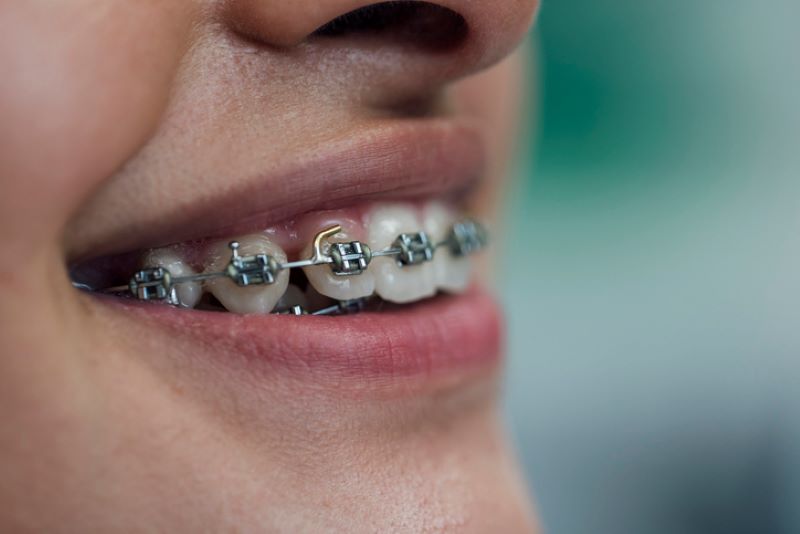
How Do Braces Work?
If you are considering braces for crowded, crooked or misaligned teeth, understanding how treatment works can make it easier to know what to expect.
Braces are orthodontic appliances used to gradually move teeth towards planned positions. They may be considered for concerns such as crowded teeth, spacing, crooked teeth or certain bite problems, depending on an individual orthodontic assessment.
Treatment usually involves brackets attached to the teeth and an orthodontic wire that applies controlled forces over time. Regular review appointments allow progress to be monitored and adjustments to be made as treatment continues.
If you are considering orthodontic treatment locally, you can learn more about our Braces in Wetherill Park service, including assessment, treatment planning and ongoing orthodontic care.
This guide explains how braces work, the main stages of treatment, expected treatment time, oral hygiene during braces and the role of retainers after treatment.
What Orthodontic Problems Can Braces Help Correct?
Braces may be used to manage a range of tooth alignment and bite concerns. Depending on the individual assessment, these can include crowded or crooked teeth, unwanted spaces between teeth and certain types of overbite, underbite or crossbite.
The treatment approach depends on factors such as tooth position, bite relationship, dental development and overall oral health. Some patients may also be suitable for clear aligners rather than fixed braces.
Learn more about Invisalign Clear Aligners in Wetherill Park and our broader Orthodontic Treatment in Wetherill Park.
The Step-by-Step Braces Procedure
Here is an overview of what braces treatment may involve:
- Initial assessment: Your teeth and bite are assessed, with photographs, digital scans or X-rays used when clinically appropriate.
- Treatment planning: Your dentist discusses the proposed treatment approach, expected treatment time, possible risks, alternatives and retention requirements.
- Placement of braces: Brackets and orthodontic wires are fitted according to the treatment plan.
- Review appointments: Progress is monitored and adjustments are made as treatment continues.
- Completion: Braces are removed when the planned treatment objectives have been reached.
- Retention: Retainers are used to help maintain tooth position after active treatment.
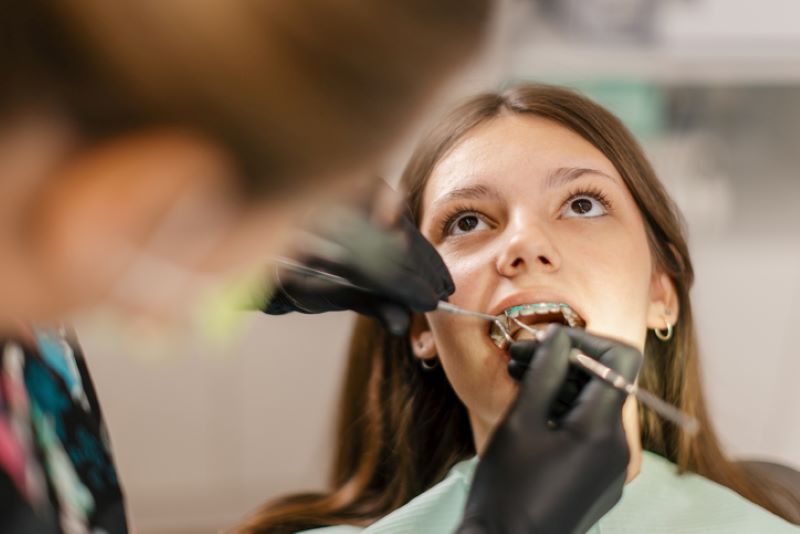
Regular orthodontic reviews allow braces to be adjusted and treatment progress to be monitored.
What Are the Potential Benefits of Braces?
Braces may provide several benefits depending on the type of alignment or bite concern being treated. These can include:
- Improved alignment of crowded or crooked teeth
- Correction of certain bite problems
- Improved dental function in suitable cases
- Changes to smile appearance
- Easier access for cleaning in some areas once teeth are better aligned
Who Is a Good Candidate for Braces?
Braces may be considered if you:
- Have crooked, crowded or misaligned teeth
- Have an overbite, underbite or crossbite that may benefit from orthodontic treatment
- Have concerns about the appearance or alignment of your teeth
- Are able to attend regular review appointments and maintain good oral hygiene
Children, teenagers and adults may be suitable for braces, depending on their dental development, oral health, tooth position and bite. An orthodontic assessment is needed to determine whether braces, clear aligners or another approach may be appropriate.
Aftercare: How to Care for Your Braces
Once braces are fitted, good oral hygiene and regular care are important. Helpful steps include:
- Brush thoroughly with a soft-bristled toothbrush
- Use floss threaders or interdental brushes to clean around brackets and wires
- Avoid hard or sticky foods that may damage orthodontic appliances
- Attend scheduled adjustment and review appointments
- Wear your retainer as directed after treatment
Maintaining good oral hygiene during braces treatment can help reduce plaque accumulation around brackets and support healthy teeth and gums throughout treatment.
After active orthodontic treatment, retainers are usually an important part of maintaining the new tooth positions. Learn more about Retainers in Wetherill Park.
For independent Australian information about teeth straightening and braces, visit the Australian Dental Association’s Teeth.org.au.
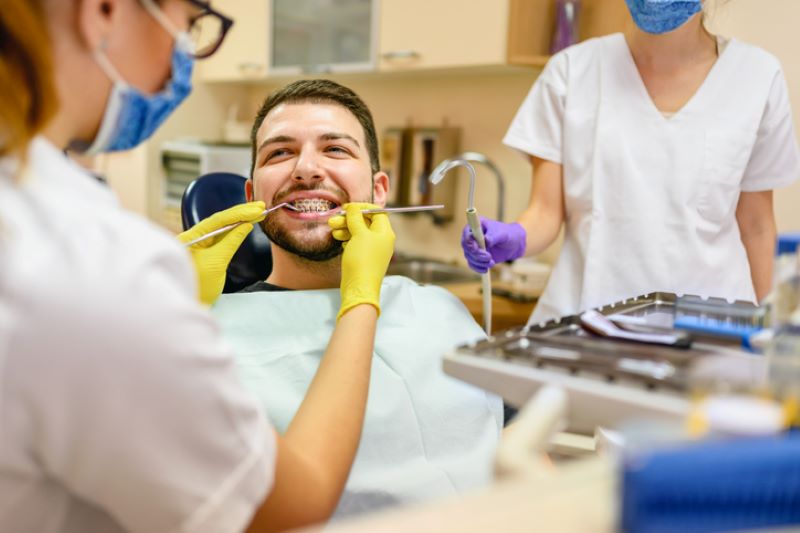
Metal braces use brackets and wires to gradually guide teeth towards planned positions.
Frequently Asked Questions About Braces
Are braces painful?
Some people experience pressure, tenderness or discomfort after braces are fitted or adjusted. The intensity and duration vary between patients and usually settle as the mouth adapts.
How long will I need to wear braces?
Treatment time varies according to the type and complexity of tooth movement required, the bite, treatment goals and individual response to treatment. Your expected treatment time will be discussed after assessment and may change as treatment progresses.
Can adults get braces?
Yes. Braces may be suitable for adults as well as children and teenagers. Suitability depends on factors including oral health, tooth position, bite and the type of orthodontic movement required.
Do I need to avoid certain foods?
Hard, sticky or very chewy foods can damage brackets or wires. Your dental team can provide advice about foods and oral hygiene during treatment.
Will I need to wear a retainer?
Retention is generally required after orthodontic treatment to help maintain tooth position. The type of retainer and recommended wear schedule depend on the individual treatment plan.
Considering Braces?
If you are considering braces, an orthodontic assessment can help determine whether braces or another orthodontic option may be appropriate for your teeth and bite.
At Dr Raymond Platon & Associates, we provide orthodontic assessment and braces treatment for suitable children, teenagers and adults at 70 Lily St, Wetherill Park NSW 2164.
We also welcome patients from nearby areas including Bossley Park, Fairfield West, Prairiewood, Wakeley and St Johns Park who are considering orthodontic assessment or braces treatment.
Learn more about our Braces in Wetherill Park service or call (02) 9609 2935 to arrange an orthodontic consultation.
Suitability for braces depends on individual dental and orthodontic needs. Treatment options, expected treatment time, possible risks, retention requirements and alternatives will be discussed during your assessment. Outcomes vary between patients.
About the Author
Dr Raymond Platon is the Principal Dentist at Dr Raymond Platon & Associates and has led the Wetherill Park practice since 2002. He completed a Bachelor of Dental Surgery with Honours at the University of Sydney and has undertaken continuing professional education in orthodontics, restorative dentistry and treatment planning.
Dr Raymond provides orthodontic assessment and braces treatment as part of his general dental practice. He is registered with the Australian Health Practitioner Regulation Agency, AHPRA Registration DEN0001321891.
Information on this page is reviewed regularly for accuracy and alignment with current dental guidance.
Suitability for orthodontic treatment, possible risks, expected treatment time, retention requirements and alternatives depend on individual clinical findings and will be discussed during your assessment.
Published on: 3 July 2025
Updated on: 25 October 2026