
If you are considering braces or clear aligners, understanding how orthodontic treatment works can make it easier to compare your options and know what to expect before an assessment.
Orthodontic treatment may be used to address concerns such as crowded or crooked teeth, unwanted spaces and certain bite problems. The most appropriate approach depends on factors including tooth position, bite, dental development, oral health and individual treatment goals.
Options may include fixed braces or clear aligners for suitable patients. This guide explains how orthodontic treatment works, the differences between common treatment options, what the process may involve and why retainers are important after active treatment.
If you are looking for treatment locally, learn more about our Orthodontic Treatment in Wetherill Park service.
What Is Orthodontic Treatment?
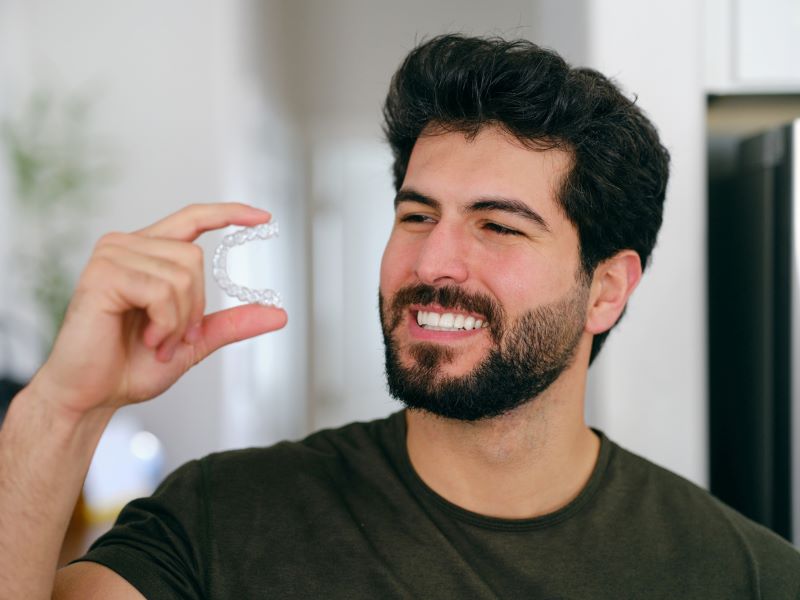
Orthodontic treatment focuses on the position of the teeth and the way the upper and lower teeth meet. Treatment may be recommended when tooth alignment or bite relationships could benefit from correction.
Braces and clear aligners work by applying controlled forces to the teeth over time. The direction and amount of movement are planned according to the individual case, and progress is reviewed throughout treatment.
Orthodontic treatment is not the same for every patient. Some concerns can be managed with clear aligners, while others may be better suited to fixed braces or another treatment approach. An assessment is therefore important before deciding which option may be appropriate.
What Can Orthodontic Treatment Help Address?
Depending on the individual assessment, orthodontic treatment may be considered for concerns such as:
- Crowded or overlapping teeth
- Crooked or rotated teeth
- Unwanted spaces between teeth
- Certain overbites
- Certain underbites
- Crossbites
- Tooth positions that affect bite function
- Alignment concerns affecting smile appearance
In some cases, improving tooth alignment can also make certain areas easier to access when brushing and cleaning between the teeth. However, orthodontic treatment does not replace good daily oral hygiene or regular dental care.
What Are the Main Orthodontic Treatment Options?
The treatment recommended will depend on the clinical findings, the type of movement required and the patient’s individual circumstances.
Fixed Braces
Braces in Wetherill Park use brackets attached to the teeth and orthodontic wires to gradually guide teeth towards planned positions.
Fixed braces may be considered for children, teenagers and adults with a range of alignment and bite concerns. Because the appliance remains attached to the teeth throughout active treatment, tooth movement can be closely controlled and reviewed during adjustment appointments.
Good oral hygiene is particularly important while wearing braces because plaque can accumulate around brackets and wires if these areas are not cleaned carefully.
Invisalign Clear Aligners
Invisalign Clear Aligners in Wetherill Park use a series of removable clear aligners to gradually move teeth according to a planned sequence.
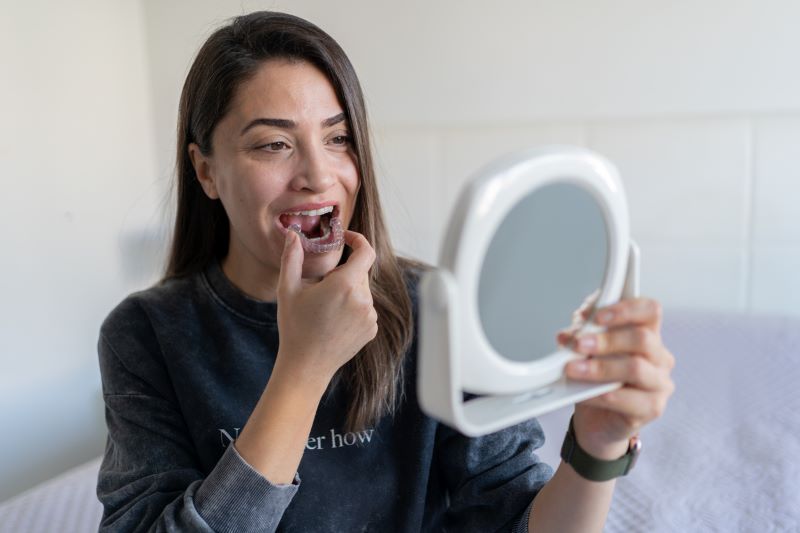
Clear aligners may be suitable for selected teenagers and adults, depending on the type and complexity of tooth movement required. Because the aligners are removable, they can be taken out for eating, brushing and cleaning between the teeth.
However, they need to be worn as instructed for treatment to progress as planned. Clear aligners are not suitable for every orthodontic concern, which is why an individual assessment is important.
What About Orthodontic Assessment for Children?
Some orthodontic concerns become noticeable while a child’s teeth and jaws are still developing. An assessment can help determine whether the issue should simply be monitored or whether treatment may be appropriate at a particular stage of development.
There is no single age at which every child should begin orthodontic treatment. Timing depends on factors such as dental development, tooth eruption, bite relationships and the nature of the orthodontic concern.
Families can also learn more about our Children’s Dentistry in Wetherill Park services.
What Happens During an Orthodontic Assessment?
An orthodontic assessment helps establish what is happening with the teeth and bite before treatment options are discussed.
Depending on the individual case, the assessment may involve:
- Examination of the teeth and bite
- Assessment of dental and gum health
- Discussion of the patient’s concerns and treatment goals
- Photographs of the teeth where appropriate
- Digital scanning
- X-rays when clinically indicated
- Review of suitable treatment options
At Dr Raymond Platon & Associates, orthodontic assessment and braces treatment are provided as part of Dr Raymond Platon’s general dental practice. Treatment recommendations are based on individual clinical findings rather than using the same approach for every patient.
What Does the Orthodontic Treatment Process Involve?
The exact process depends on the treatment selected, but orthodontic care commonly involves several stages.
- Assessment: The teeth, bite and oral health are examined.
- Diagnostic records: Photographs, digital scans or X-rays may be used when clinically appropriate.
- Treatment planning: Suitable options, expected treatment time, possible risks, alternatives and retention requirements are discussed.
- Active treatment: Braces or clear aligners are used according to the individual treatment plan.
- Review appointments: Tooth movement and treatment progress are monitored, with adjustments made where clinically appropriate.
- Retention: Retainers are generally recommended after active treatment to help maintain tooth position.
Treatment time varies considerably between patients. The complexity of the tooth movement, the bite, oral health, treatment goals and individual response to treatment can all influence how long treatment takes.

How Do You Look After Your Teeth During Orthodontic Treatment?
Maintaining good oral hygiene is especially important during orthodontic treatment. Brackets, wires and other orthodontic appliances can create additional areas where plaque and food can collect.
Helpful steps may include:
- Brushing thoroughly with fluoride toothpaste
- Cleaning carefully between the teeth
- Cleaning around brackets and wires as instructed
- Cleaning removable aligners regularly if they are being used
- Avoiding foods that may damage fixed orthodontic appliances
- Attending recommended dental and orthodontic review appointments
Your dental team can provide individual advice about cleaning techniques and products based on the appliance you are using and your oral health.
Why Are Retainers Important After Orthodontic Treatment?
Teeth can move after active orthodontic treatment has finished. Retainers are therefore usually recommended to help maintain the new tooth positions.
The type of retainer and recommended wear schedule depend on the individual treatment plan. Some retainers are removable, while others may be fixed behind the teeth.
Following the recommended retention plan is an important part of orthodontic care. Learn more about Retainers in Wetherill Park.
Braces or Clear Aligners: Which Is Better?
There is no single orthodontic option that is best for everyone.
Braces and clear aligners can both be effective in suitable cases, but they work differently and have different advantages and limitations. The choice may depend on factors such as the complexity of tooth movement required, bite concerns, oral health, age, lifestyle and the patient’s ability to follow treatment instructions.
For example, removable aligners require consistent wear, while fixed braces remain attached to the teeth throughout treatment. Some orthodontic movements may also be more appropriately managed with one system than another.
An individual assessment is the best way to determine which treatment options are clinically appropriate.
Frequently Asked Questions About Orthodontic Treatment
How long does orthodontic treatment take?
Treatment time varies according to the type and complexity of tooth movement required, the bite, treatment goals and individual response to treatment. Your expected treatment time will be discussed after assessment and may change as treatment progresses.
Is Invisalign as effective as braces?
Both clear aligners and fixed braces can be effective orthodontic treatments in suitable cases. The most appropriate option depends on the type and complexity of tooth movement required, oral health, treatment goals and the individual assessment.
Is orthodontic treatment painful?
Some people experience pressure, tenderness or temporary discomfort after braces are fitted or adjusted, or when changing to a new set of clear aligners. The intensity and duration vary between patients.
What is the best age to start orthodontic treatment?
There is no single best age for every patient. The appropriate timing depends on dental development, the type of orthodontic concern and whether treatment at a particular stage may provide a clinical benefit.
Will my teeth stay straight after orthodontic treatment?
Teeth can move after active orthodontic treatment. Retainers are therefore generally recommended to help maintain tooth position. Retention requirements vary between patients and should be followed as advised.
Can adults have orthodontic treatment?
Yes. Adults may be suitable for braces or clear aligners depending on factors such as oral health, tooth position, bite and the type of movement required. Age alone does not determine whether orthodontic treatment is appropriate.
Considering Orthodontic Treatment?
If you are considering braces or clear aligners, an orthodontic assessment can help determine whether treatment may be appropriate and which options are suitable for your teeth and bite.
At Dr Raymond Platon & Associates, we provide orthodontic assessment and treatment for suitable children, teenagers and adults at 70 Lily St, Wetherill Park NSW 2164.
We also welcome patients from nearby areas including Bossley Park, Fairfield West, Prairiewood, Wakeley and St Johns Park.
Our free orthodontic consultation includes a digital scan. Learn more about our Orthodontic Treatment in Wetherill Park service or call (02) 9609 2935 to arrange a consultation.
Suitability for orthodontic treatment depends on individual clinical findings. Treatment options, expected treatment time, possible risks, retention requirements and alternatives will be discussed during your assessment. Outcomes vary between patients.
For independent Australian information about teeth straightening and orthodontic treatment, visit the Australian Dental Association’s Teeth.org.au.
About the Author
Dr Raymond Platon is the Principal Dentist at Dr Raymond Platon & Associates and has led the Wetherill Park practice since 2002. He completed a Bachelor of Dental Surgery with Honours at the University of Sydney and has undertaken continuing professional education in orthodontics, restorative dentistry and treatment planning.
Dr Raymond provides orthodontic assessment and treatment as part of his general dental practice. His orthodontic education includes further training through the University of Sydney and other professional orthodontic education programs.
He is registered with the Australian Health Practitioner Regulation Agency, AHPRA Registration DEN0001321891.
Information on this page is reviewed regularly for accuracy and alignment with current dental guidance.
Suitability for orthodontic treatment, possible risks, expected treatment time, retention requirements and alternatives depend on individual clinical findings and will be discussed during your assessment.
Published on: 20 August 2025
Updated on: 25 October 2026