

This article from Dr Raymond Platon & Associates explains when you should see a dentist in Wetherill Park. Learn which symptoms may seem minor at first but can indicate tooth damage, gum disease, or infection that requires early treatment.
You should see a dentist in Wetherill Park if you experience persistent tooth pain, sensitivity, swelling, or changes in how your teeth feel when biting. These symptoms often indicate underlying dental issues such as decay, cracks, or infection that require early treatment.
When to see a dentist in Wetherill Park is a common question when symptoms first appear.
Many people are unsure when a dental problem needs professional attention. Some symptoms appear gradually and are easy to ignore, while others become noticeable only when they begin to affect eating or comfort.
Patients from Fairfield West, Bossley Park, Prairiewood, Wakeley, and St Johns Park often delay seeing a dentist until discomfort becomes more persistent. However, these early changes are often the first indication that something in the tooth or gums has shifted.
In many cases, dental problems begin with subtle signs such as sensitivity, pressure when biting, or food getting stuck between teeth. While these symptoms may seem minor, they can indicate early stages of decay, structural damage, or gum irritation.
These symptoms are common reasons patients visit a dentist in Wetherill Park and are often early warning signs of underlying dental problems that require professional assessment.
For this reason, recognising when to see a dentist in Wetherill Park can help prevent more complex dental problems. Seeing a dentist in Wetherill Park early allows problems to be diagnosed and treated before they become more complex or painful.
When to See a Dentist in Wetherill Park: Common Signs
Some symptoms develop slowly, while others appear more suddenly. When they occur repeatedly in the same area, they usually indicate that the tooth or surrounding tissue requires attention.
If you are unsure whether these symptoms require attention, a dental check up can help identify the cause early and prevent further complications.
You should not ignore these signs, especially if they appear more than once or become more noticeable over time:
• discomfort when biting or chewing
• sensitivity to hot, cold, or sweet foods
• food consistently getting stuck in the same place
• gum swelling, bleeding, or tenderness
• a tooth feeling slightly loose or different
If food regularly becomes trapped, it may indicate a change in how the teeth contact each other. You can read Food Stuck Between Teeth in Wetherill Park: Causes, When to Worry and What to Do to understand what may be causing this.
When Symptoms May Seem Minor but Are Not
Some dental problems do not cause strong pain at first. Instead, they appear as mild sensitivity or occasional discomfort.
A tooth that feels sensitive when eating or drinking may indicate enamel wear or early decay. Because the symptoms are not severe, they are often ignored.
However, when discomfort occurs repeatedly or becomes more noticeable, it usually indicates that the condition is progressing. Early assessment allows the problem to be identified before it becomes more complex.
When to See a Dentist in Wetherill Park Before Problems Get Worse
Delaying dental care can allow small problems to develop into more serious conditions.
For example, a minor area of decay can gradually deepen and affect the inner part of the tooth. Discomfort when biting may indicate structural changes within the tooth.
You can read Why Does My Tooth Hurt When I Bite Down in Wetherill Park to understand how these symptoms can develop.
When left untreated, bacteria can spread deeper into the tooth and lead to infection. At this stage, treatment becomes more involved.
In these situations, treatment may be required to remove infection and preserve the tooth. You can learn more about Root Canal Therapy in Wetherill Park and how deeper dental problems are treated effectively.
If left untreated, these problems can progress quickly and may lead to infection, tooth damage, or the need for more complex dental treatment.
If you are unsure whether your symptoms require attention, a dental check up can help identify the cause early and prevent further complications. A dentist check up in Wetherill Park allows early detection of changes before symptoms become more serious.
How Dentists Identify the Cause
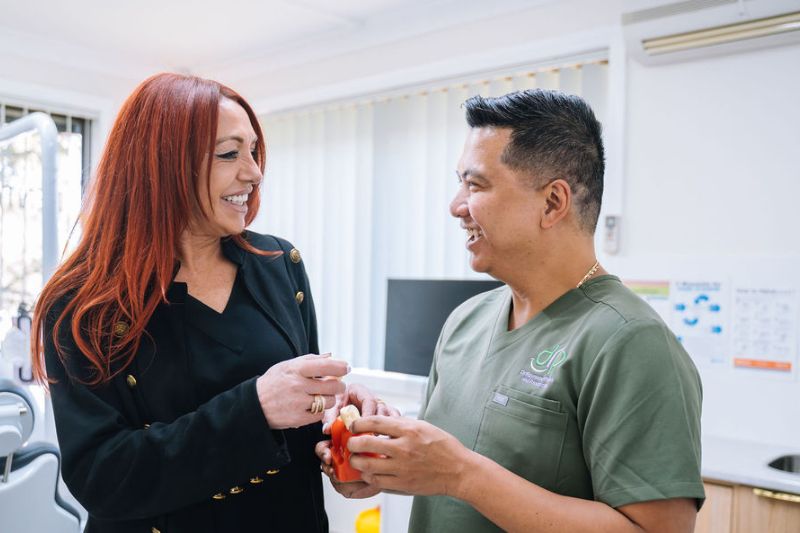
Dr Raymond Platon explaining a dental condition and treatment options to a patient in Wetherill Park
A dental examination allows the cause of symptoms to be identified accurately.
The dentist will assess the teeth and gums and may use digital X-rays to examine areas that are not visible during a routine check. This helps determine whether the issue involves the surface of the tooth, the supporting structures, or the inner part of the tooth.
Once the cause is identified, treatment can be planned based on the condition of the tooth.
How Dental Problems Are Treated
Treatment depends on the nature and severity of the problem.
In many cases, early-stage conditions can be treated simply. For example, decay may be managed with a filling, while minor structural damage may be stabilised or restored.
If a tooth requires additional protection after treatment, a restoration may be recommended. You can learn more about Dental Crowns in Wetherill Park and how they help strengthen and protect weakened teeth.
Preventive care also plays an important role in identifying problems early. You can explore Preventive Dentistry in Wetherill Park to understand how routine care helps reduce the risk of more complex treatment.
Why Early Dental Care Makes a Difference

Clear explanations from our team help patients understand their treatment and feel confident about their dental care
Early dental care plays an important role in maintaining oral health.
When problems are identified early, treatment is often simpler, more predictable, and less invasive. This helps preserve the natural tooth structure and reduces the risk of complications.
For general oral health guidance, you can refer to the Australian Dental Association for evidence-based information.
What You Should Avoid Doing
When symptoms appear, it is common to delay treatment or rely on temporary solutions.
Avoid ignoring recurring discomfort or attempting to manage symptoms without understanding the cause. These approaches may allow the condition to progress.
If a symptom continues or changes, it is best to have it assessed rather than waiting for it to settle.
Frequently Asked Questions About When to See a Dentist in Wetherill Park
How do I know if I need to see a dentist?
If a symptom repeats, worsens, or affects eating or comfort, it usually indicates that the tooth or gums should be examined.
Is it okay to wait if the pain is mild?
Mild symptoms often indicate early-stage problems, and waiting may allow the condition to progress.
Can small dental problems become serious?
Yes. Many dental issues begin as minor changes but can develop into more advanced conditions if left untreated.
What if I only feel discomfort sometimes?
Occasional discomfort may still indicate an underlying issue, especially if it occurs in the same area.
Can early treatment prevent major procedures?
In many cases, yes. Early treatment reduces the need for more complex dental care.
Book a Dental Check Up in Wetherill Park
If you are noticing ongoing discomfort, sensitivity, or changes in your teeth, it is important not to wait until the problem worsens.
At Dr Raymond Platon & Associates, our team provides thorough examinations to identify the cause and recommend appropriate care.
We welcome patients from Wetherill Park and surrounding suburbs including Fairfield West, Bossley Park, Prairiewood, Wakeley, and St Johns Park.
Our team has been providing dental care to the Wetherill Park community for over 30 years, helping patients maintain long-term oral health through early diagnosis and personalised treatment.
Find our clinic on Google Maps:
About the Author
Dr Raymond Platon & Associates continues a proud legacy of over 30 years of dental care in Wetherill Park. Dr Raymond Platon took over the practice in 2002 and has since built a trusted reputation for patient focused, high quality dentistry. All information on this page is reviewed regularly to ensure accuracy and compliance with current dental guidelines. Suitability, risks, recovery needs and alternatives will always be discussed with your dentist. Outcomes vary for each patient.
Published on: 19 May 2026
Updated on: 19 May 2026